
More than fifty years ago, the visual arts and creative disciplines subscribed to theory as an integral part of the work of art or work. The idea of dematerialization took shape in artistic projects that prioritized ideas, research processes and archiving before the result or materiality of the work itself. Conceptualism, an artistic trend characterized by dematerialization, established discursive strategies -as well as policies of resistance- parallel to those undertaken by paper architecture, structuralist cinema and the new wave, intertextuality, the essay novel, minimalist music and postmodern dance, among other experimental modalities of languages that, in addition to questioning the commodification of art, promoted a type of interdisciplinary collaboration.
Within this radical epistemological paradigm, the Uruguayan artist based in New York, Luis Camnitzer, has stood out. Starting in the 1960s, Camnitzer developed an aesthetic-political line located within the confines of education, understood as an anti-colonial methodology. But in recent years, Luis Camnitzer has dedicated himself to studying the potential for resistance in artificial intelligence (AI).
AI is producing a revolution that consists of a rapid cognitive change that fundamentally modifies research processes and the logic of knowledge production. Paradoxically, by reducing the time spent researching and collecting data, artificial intelligence is transforming so-called archival evil into a portentous fictional machine that unfolds and hyperbolizes the capacities of the humanities. The enormous speed that AI has acquired in processing information and its ability to relate and connect disciplines, textual bodies and knowledge make it a technological resource that exponentially expands human capacities. Perhaps that is why AI is considered in the humanities as a monstrous advance, a modern Prometheus, which threatens to destroy the disciplines of the spirit. Luis Camnitzer will talk about this tool that announces the author's second death (after Barthes and Borges) whose resurrection is left to an ex machina reader.
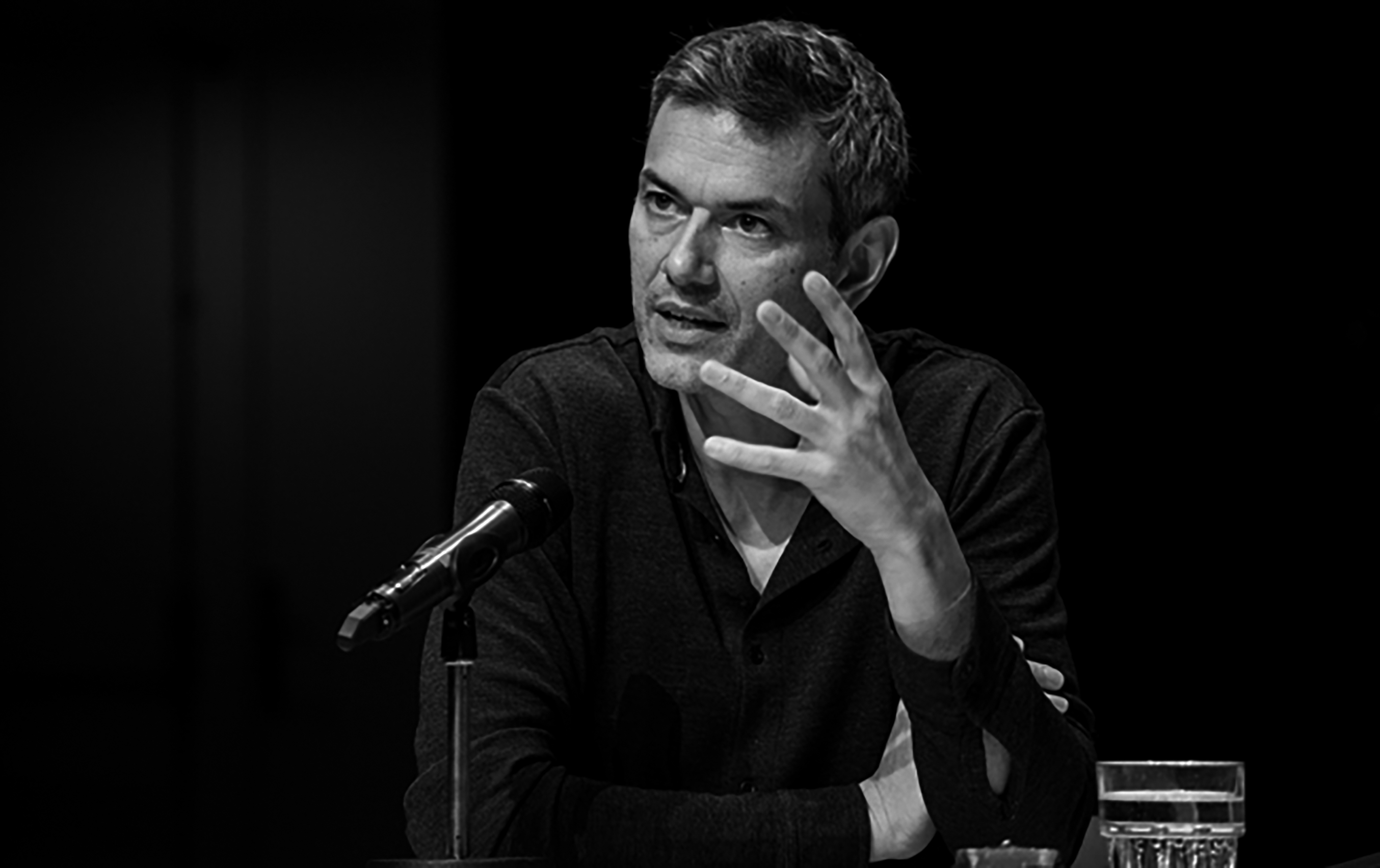
Luis Camnitzer. Uruguayan artist, critic, educator and theorist born in 1937. He has developed his practice for nearly five decades. In 1964 he co-founded the New York Graphic Workshop, together with the Argentinian Liliana Porter and the Venezuelan José Guillermo Castillo. His work has been shown at important exhibitions and institutions since the 1960s, and has been part of numerous international biennials. He was the pedagogical advisor for the art in education program of the Patricia Phelps de Cisneros Collection from 2009 to 2013.
Gabriela Rangel (Venezuela, 1963). Curator and independent writer. From 2004 to 2019 she was director of visual arts and curator at Americas Society, New York, and from 2019 to 2021 she was artistic director at the Museum of Latin American Art in Buenos Aires (Malba). She was assistant curator at the Museum of Fine Arts in Houston from 2001 to 2004. He has a Master of Arts degree from the Center for Curatorial Studies at Bard College, New York.




.jpg)


