The rich text element allows you to create and format headings, paragraphs, blockquotes, images, and video all in one place instead of having to add and format them individually. Just double-click and easily create content.
A rich text element can be used with static or dynamic content. For static content, just drop it into any page and begin editing. For dynamic content, add a rich text field to any collection and then connect a rich text element to that field in the settings panel. Voila!
Headings, paragraphs, blockquotes, figures, images, and figure captions can all be styled after a class is added to the rich text element using the "When inside of" nested selector system.
The rich text element allows you to create and format headings, paragraphs, blockquotes, images, and video all in one place instead of having to add and format them individually. Just double-click and easily create content.
A rich text element can be used with static or dynamic content. For static content, just drop it into any page and begin editing. For dynamic content, add a rich text field to any collection and then connect a rich text element to that field in the settings panel. Voila!
Headings, paragraphs, blockquotes, figures, images, and figure captions can all be styled after a class is added to the rich text element using the "When inside of" nested selector system.


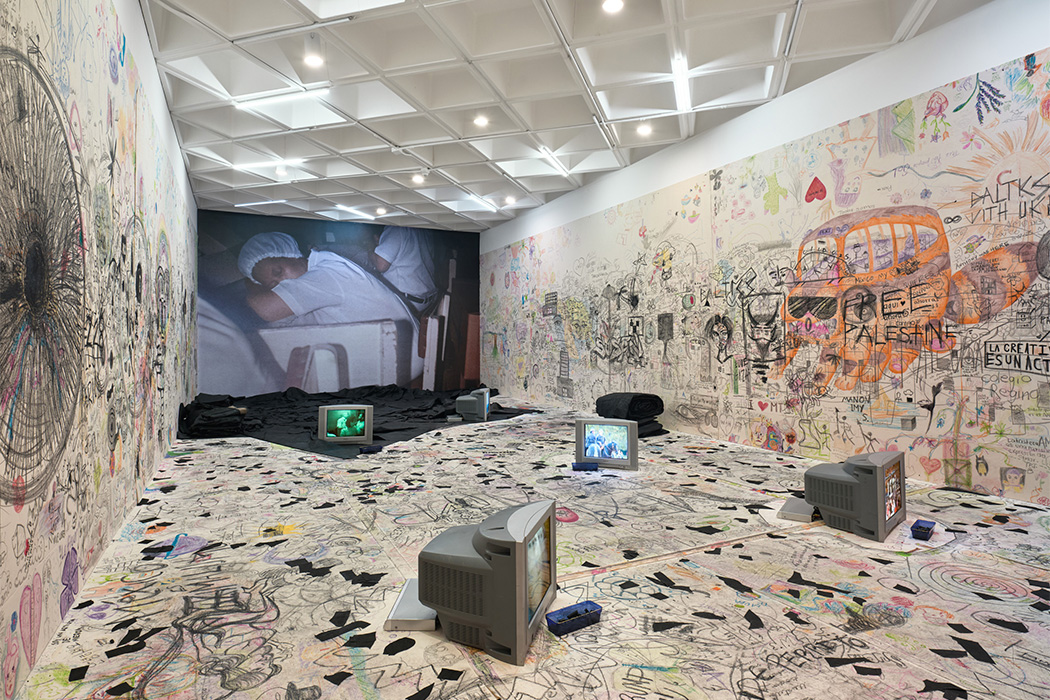
Oscar Murillo’s work explores ideas of collectivity and shared culture, going beyond the conventional confinements of the pictorial act by inserting itself into the dynamics of group interaction. His practice is part of a genealogy of artists who destabilize traditional hierarchies in art, turning canvas, gesture, and installation into surfaces for social inscription.
Following his solo show at The Museum of Contemporary Art Monterrey, Murillo continues his understanding of the exhibition space as an incubator for materiality and mark-making. Canvas filled with messages, marks, and drawings left by visitors sprawls the central patio of the museum. The building itself becomes, not just a neutral container but, a stage for performance; a swamp of layered marks.
In previous participatory iterations, Murillo invited public intervention through colour, offering paint to visitors in a collective, monumental act of mark-making. In this iteration, Murillo turns to black. Scattered piles of black crayons replace paint, inviting the public to contribute with gestures of erasure. Here, Murillo’s swamp becomes obscured, shrouded in black; an ode to both obliteration and renewal, sight and blindness and consumption and purity. Large swathes of stitched and weathered black fabric—once part of Murillo's installation at the 56th Venice biennale, All the Worlds Futures—occupy the space as a latent spiritual presence hanging from the ceiling and crumpled on the floor. Overwhelming in scale, the material becomes an active participant imbued with energy of the visitors to the museum.
Small sections of the black fabric will be ceremoniously cut and offered to members of the public throughout the duration of the show—as though spirits embedded with material history, were spreading through the city.
Through Spirits in the Swamp, Murillo presents the social not as a mere depiction but as a structural force that reshapes the aesthetic experience. The exhibition probes questions of visibility, precarity, and the way art operates as a point of friction between history, memory, and collectivity.
Curated by Taiyana Pimentel.
Spirits in the Swamp is a collaboration between the Museo de Arte Contemporáneo de Monterrey (MARCO) and Museo Tamayo.
Photo credits:
Oscar Murillo, A Mercantile Novel , 1985
signalling devices for a now bastard territory, 2015. © Oscar Murillo
%2012.54.52%E2%80%AFp.m..png)
Para socializar la heterogeneidad de voces que construyen la exposición colectiva OTRXS MUNDXS y profundizar en el discurso de las obras exhibidas en el Museo Tamayo, le pedimos a lxs artistas que nos hablen acerca de los conceptos o ideas que son importantes para expandir los discursos o motivaciones de su práctica.
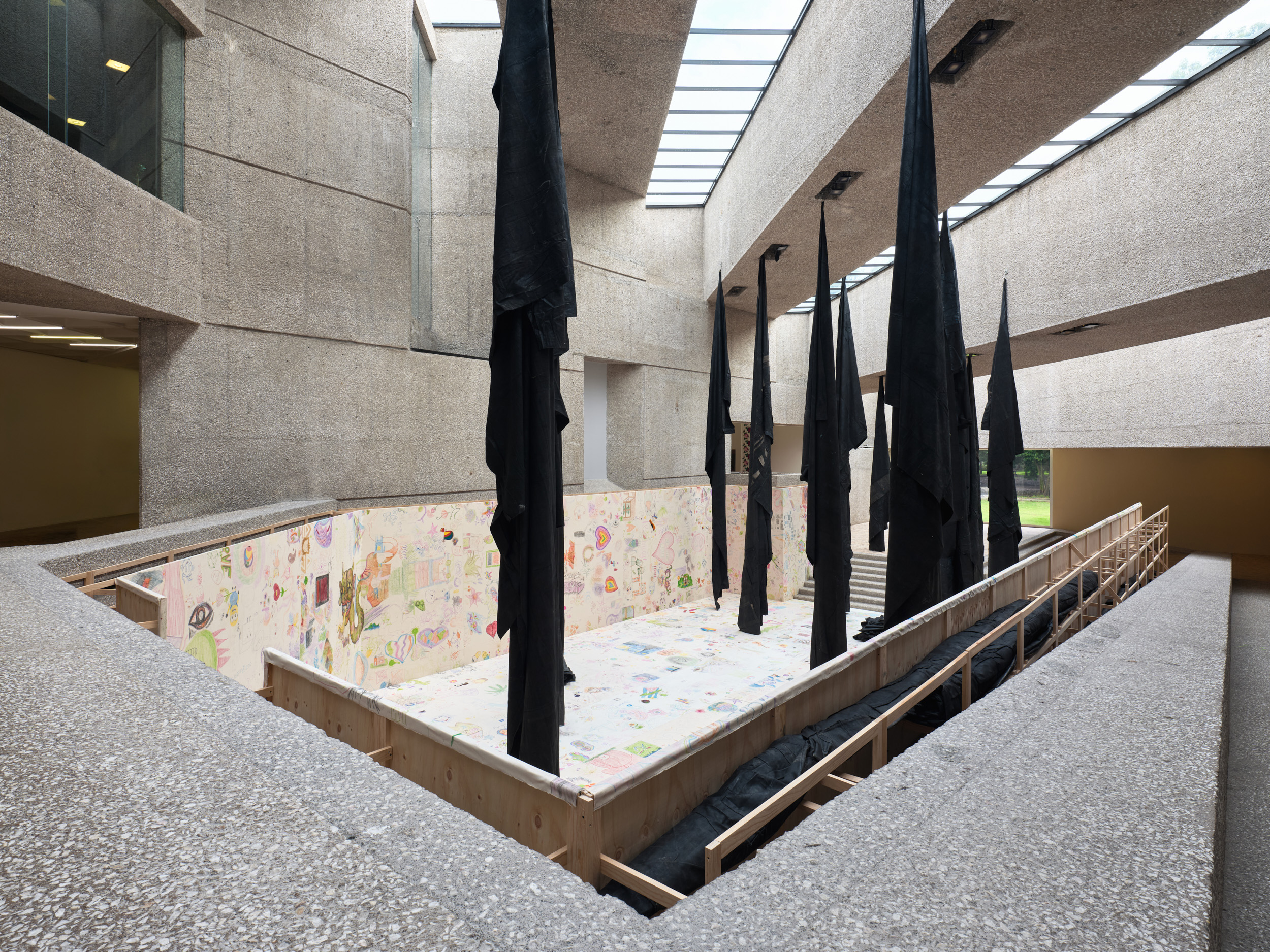

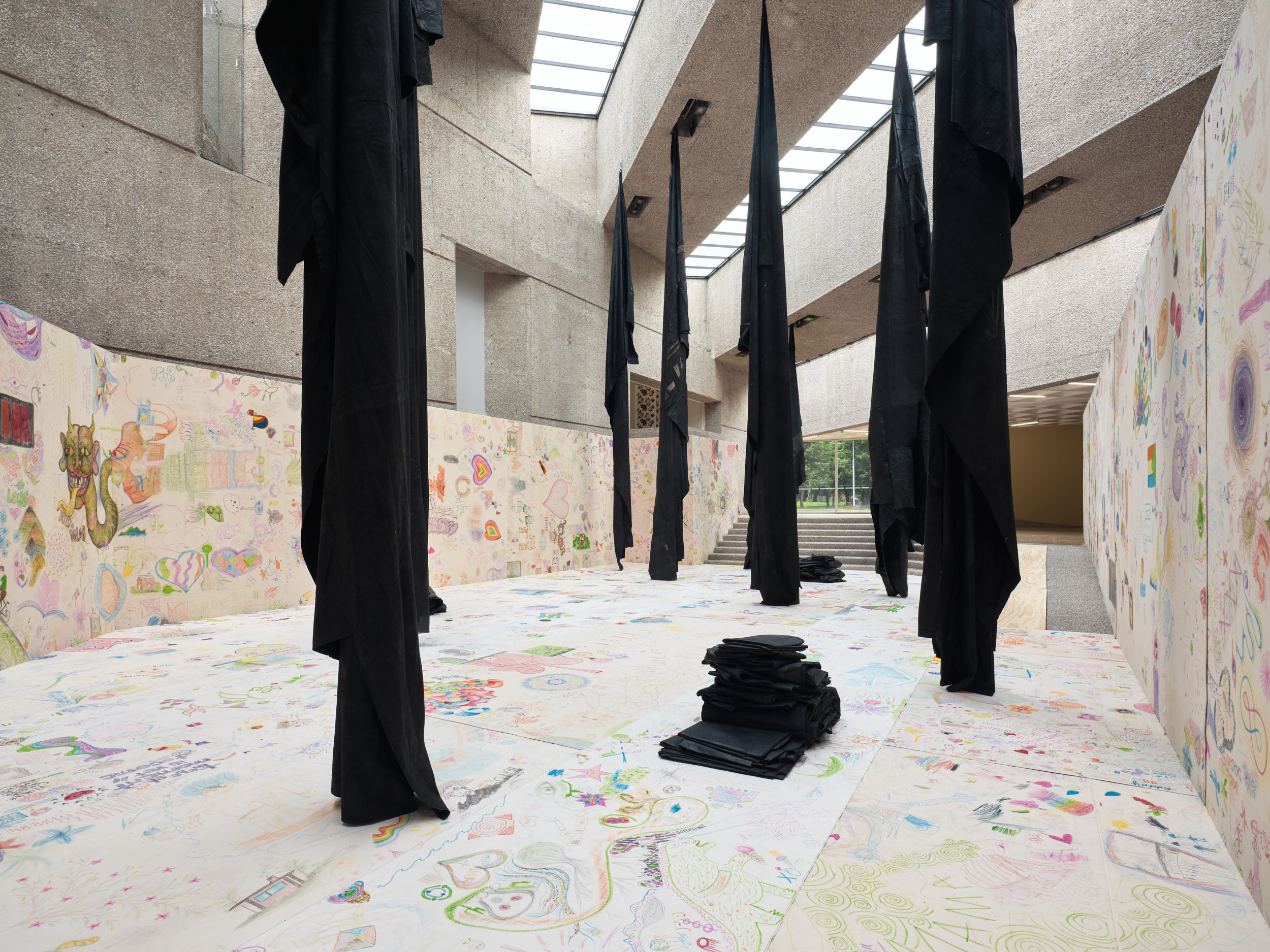
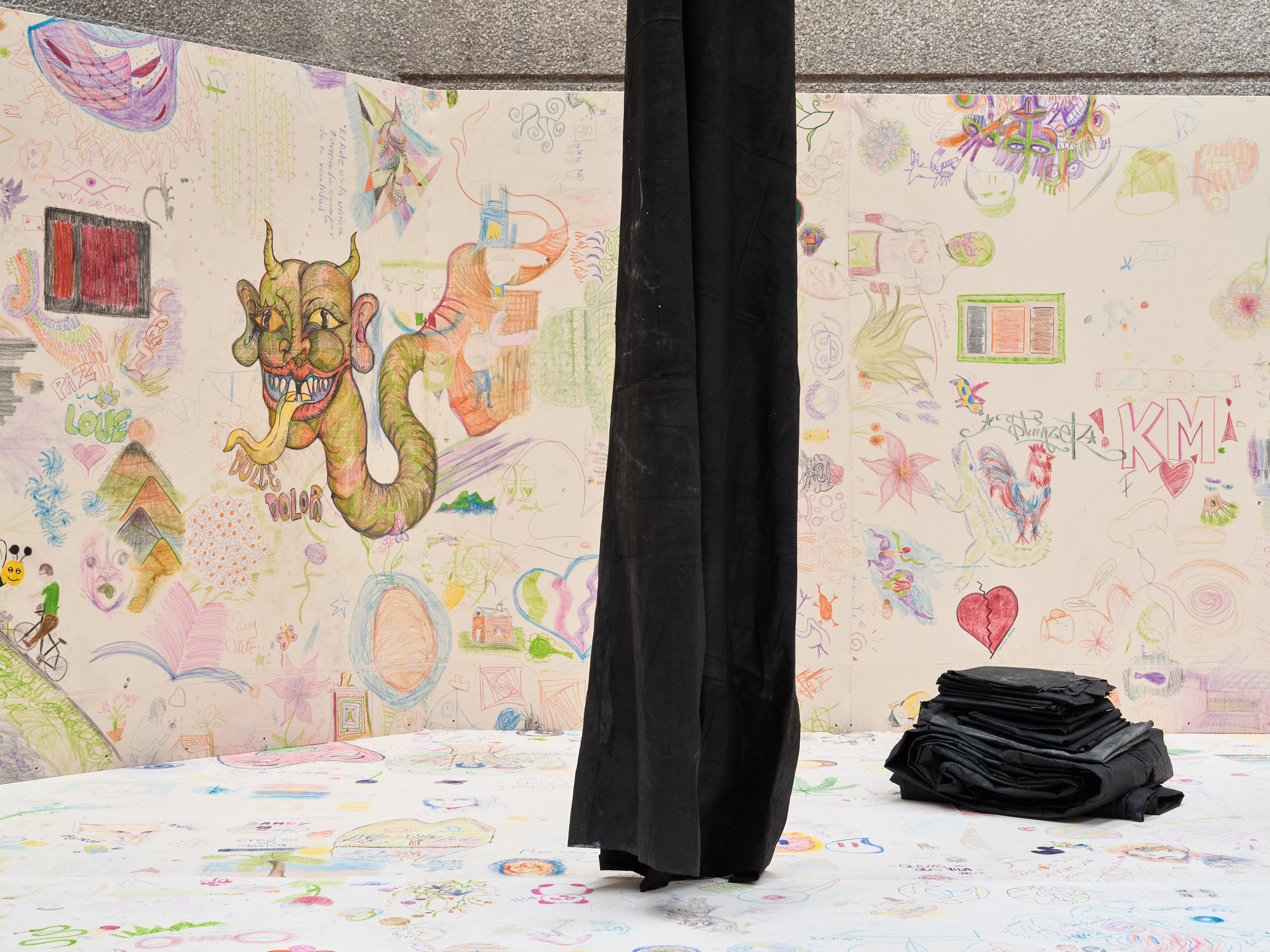
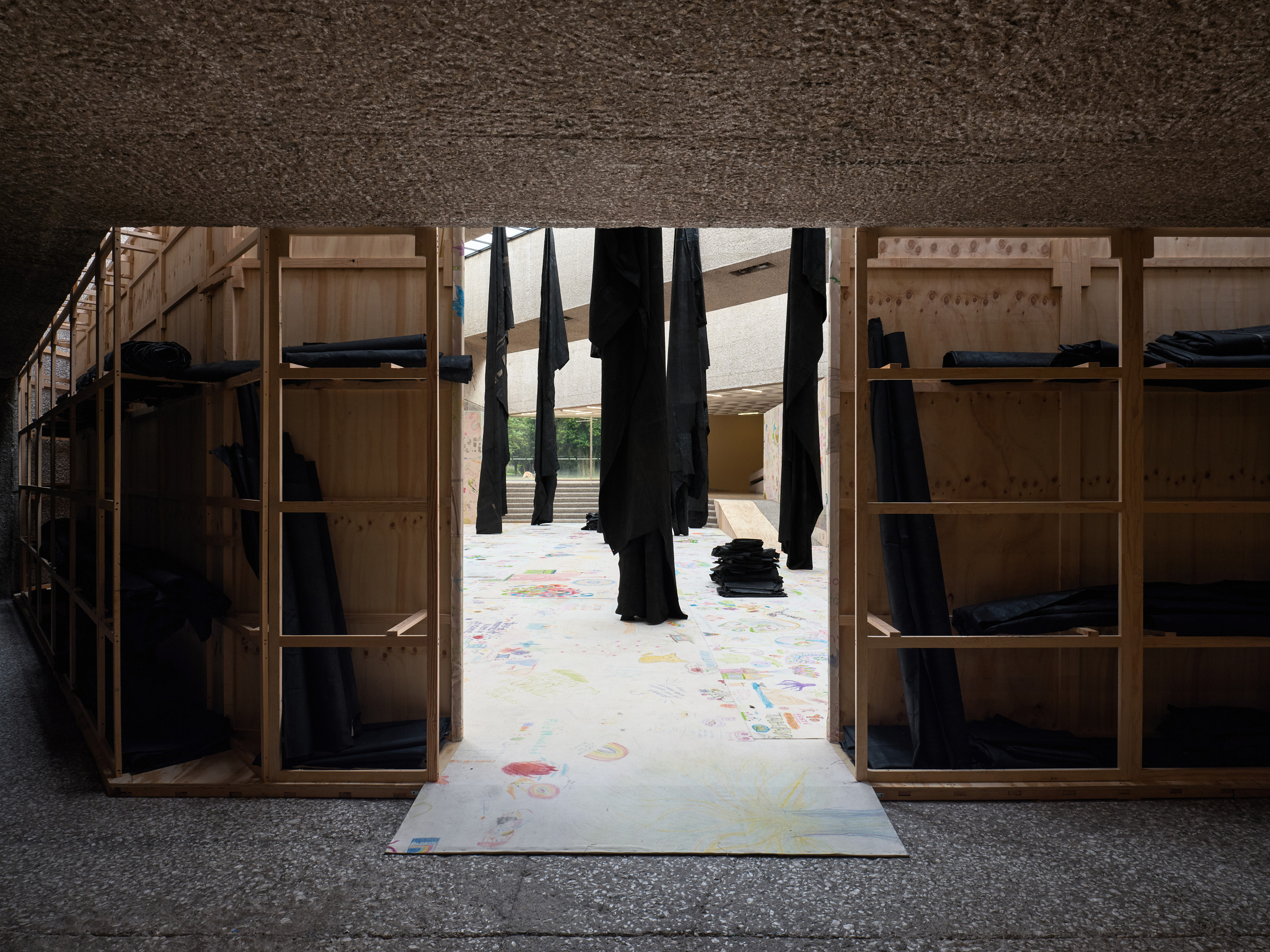
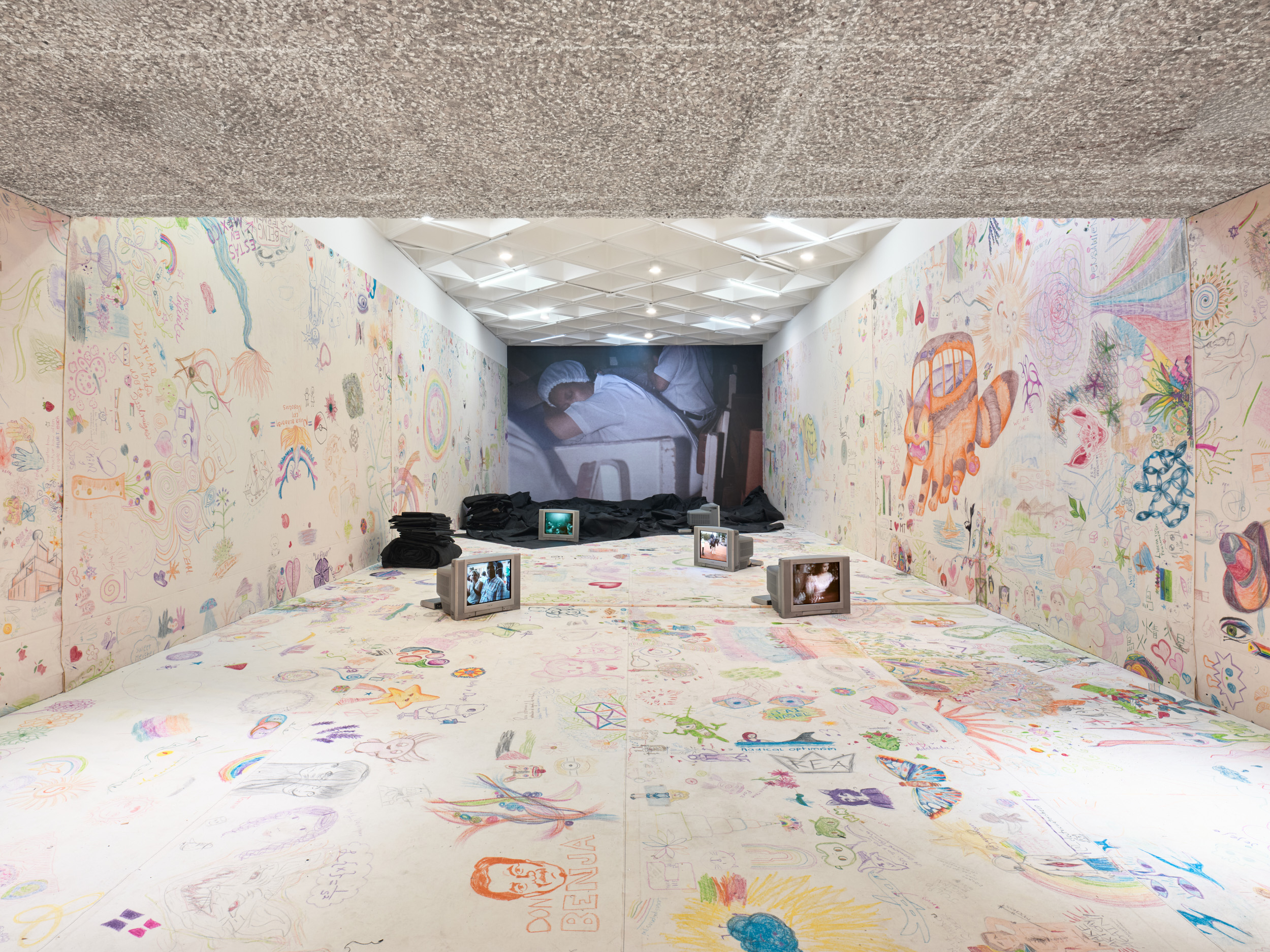


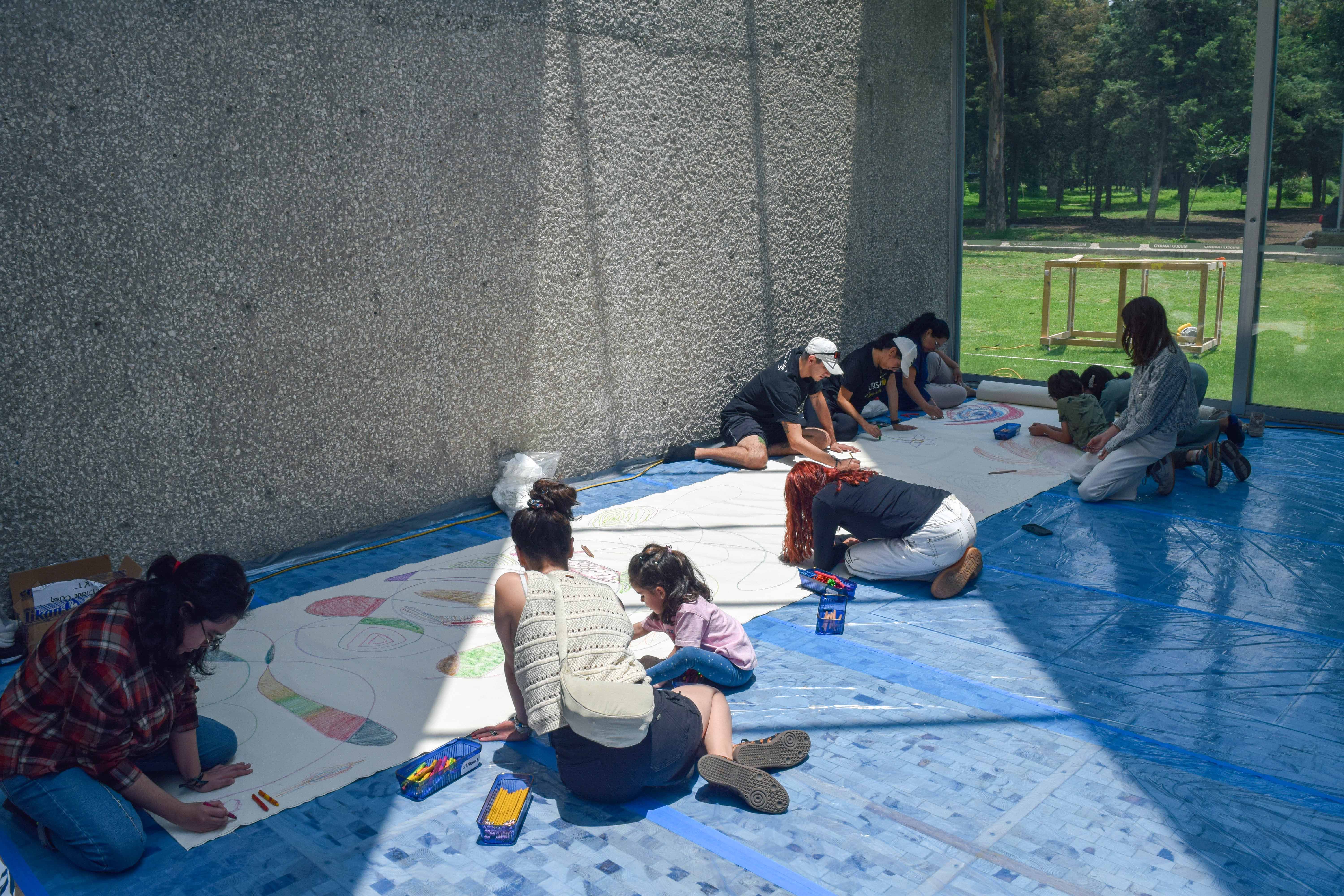
Oscar Murillo explores the concepts of collectivity and shared culture. The artist links the pictorial act with dynamics of participation, thus transcending the conventional limits of authorship and pictorial tradition. As part of their exhibition at the Tamayo Museum, visitors have been able to draw freely - and will be able to do so over the three months that Spirits in the Swamp remain open- on fabric surfaces, which is giving rise to an accumulation of traces that extend across the central space of the museum, and through sala 5, like a swamp.
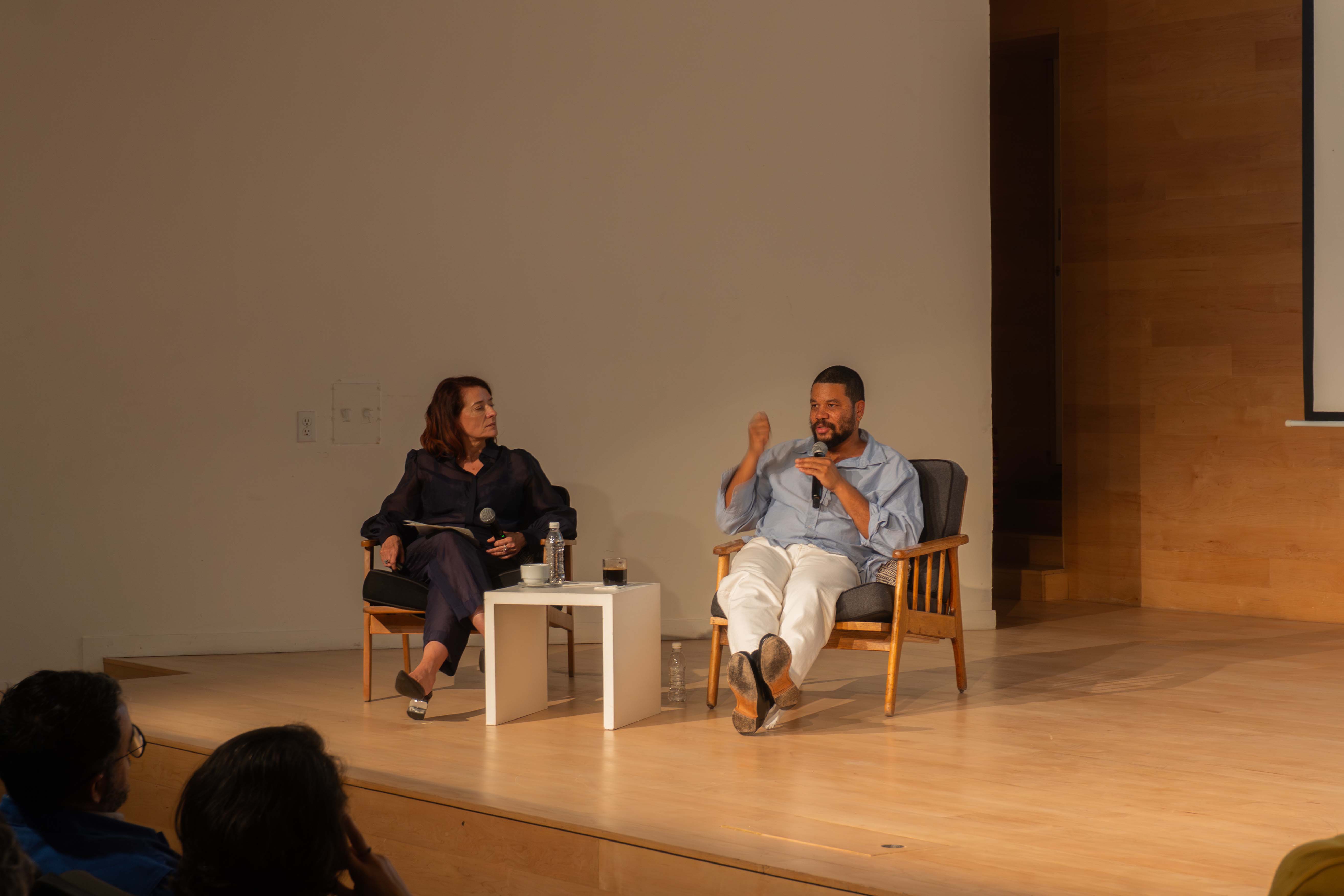
Taiyana Pimentel, curator of the exhibition, will talk with Oscar Murillo about this collective work of art and about his conception of exhibition space as an area for the development of materiality and the production of strokes.
Oscar Murillo’s work explores ideas of collectivity and shared culture, going beyond the conventional confinements of the pictorial act by inserting itself into the dynamics of group interaction. His practice is part of a genealogy of artists who destabilize traditional hierarchies in art, turning canvas, gesture, and installation into surfaces for social inscription.
Following his solo show at The Museum of Contemporary Art Monterrey, Murillo continues his understanding of the exhibition space as an incubator for materiality and mark-making. Canvas filled with messages, marks, and drawings left by visitors sprawls the central patio of the museum. The building itself becomes, not just a neutral container but, a stage for performance; a swamp of layered marks.
In previous participatory iterations, Murillo invited public intervention through colour, offering paint to visitors in a collective, monumental act of mark-making. In this iteration, Murillo turns to black. Scattered piles of black crayons replace paint, inviting the public to contribute with gestures of erasure. Here, Murillo’s swamp becomes obscured, shrouded in black; an ode to both obliteration and renewal, sight and blindness and consumption and purity. Large swathes of stitched and weathered black fabric—once part of Murillo's installation at the 56th Venice biennale, All the Worlds Futures—occupy the space as a latent spiritual presence hanging from the ceiling and crumpled on the floor. Overwhelming in scale, the material becomes an active participant imbued with energy of the visitors to the museum.
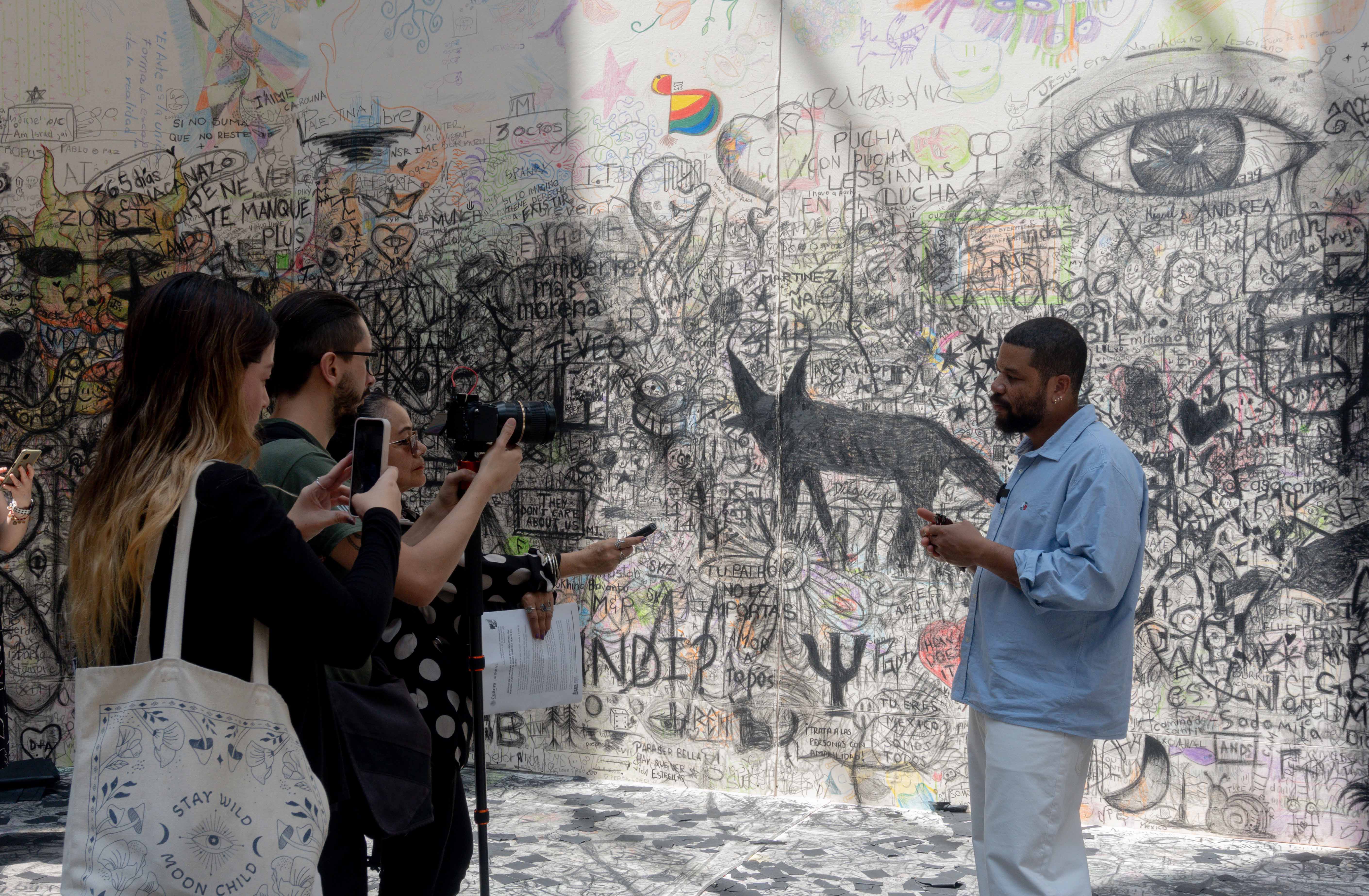
The work of Oscar Murillo (Colombia, 1986) explores ideas of collectivity and shared culture, going beyond the conventional confines of the pictorial act by inserting itself into the dynamics of group interaction. His practice responds to a genealogy of artists who destabilize traditional hierarchies in art, turning canvas, gesture and installation into surfaces for social inscription.
For his exhibition Spirits in the Swamp at the TMuseo Tamayo, canvases full of messages, marks and drawings made by visitors will occupy the central courtyard. The building will become not just a neutral container, but a stage for the performance: a swamp with multiple layers.
We invite the public to participate in the drawing sessions that will take place in the museum's courtyard as part of this exhibition, which can be visited starting Saturday, August 23 during the usual Tamayo hours, from 10:00 a.m. to 6:00 p.m.
Spirits in the Swamp is a collaboration between the Museo de Arte Contemporáneo de Monterrey (MARCO) and Museo Tamayo.
Curated by Taiyana Pimentel.